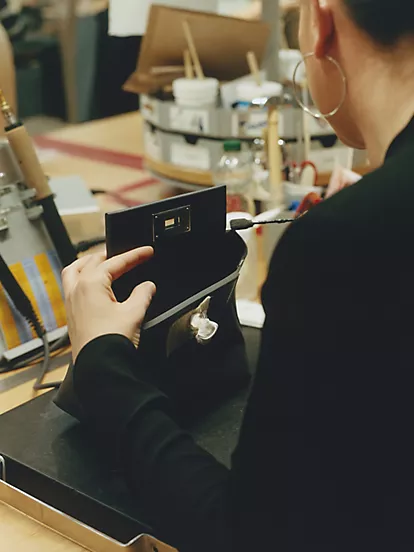
Hermès, artesanos contemporáneos desde 1837

Six generations of artisans

Desde 1837, generación tras generación, Hermès sigue un doble hilo – por un lado, el minucioso trabajo del artesano en su taller; por otro, los estilos de vida de sus clientes. Impulsado por un espíritu de libertad y creatividad perdurable, Hermès se mantiene muy atento a la naturaleza cambiante y a las necesidades de la sociedad.
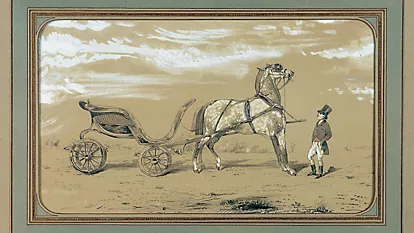
Duc attelé, groom à l'attente

"Duc attelé, groom à l'attente", Alfred de Dreux (1810-1860)- Emile Hermès Collection

© Guy Lucas de Peslouan

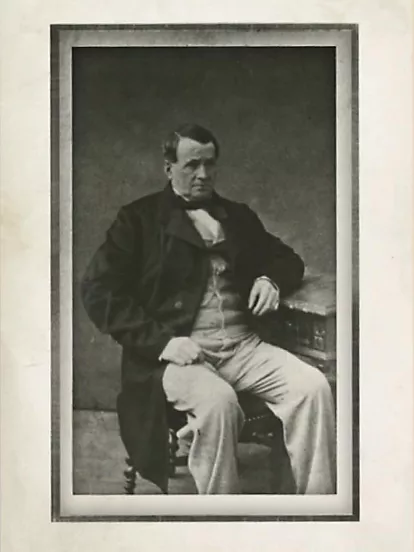
Thierry Hermès

Retrato de Thierry Hermès (1801-1878), fundador de Hermès

© Santiago et Rottier

1837

Thierry Hermès
La aventura comenzó en París en 1837, cuando el guarnicionero Thierry Hermès abrió un taller en la rue Basse-du-Rempart. Desde el principio, comprendió y anticipó las expectativas de sus clientes, su deseo de sencillez y ligereza en una ciudad palpitante de movimiento moderno. Sus arneses encarnaban una finura discreta y una resistencia a toda prueba: una proeza técnica reconocida con un premio en la Exposición Universal de 1867.
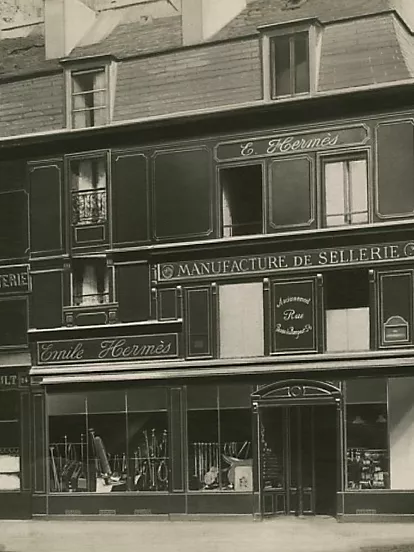
24 Faubourg Saint-Honoré

Hermès at 24 Faubourg Saint-Honoré in 1880

© All rights reserved

1880

Charles-Émile Hermès
Charles-Émile Hermès, Thierry Hermès’ son, moved the workshops to 24 Faubourg Saint-Honoré, and opens a store. At this now-emblematic address, harnesses and saddles were made to measure. The house’s reputation for the excellence of its creations spread throughout Europe.
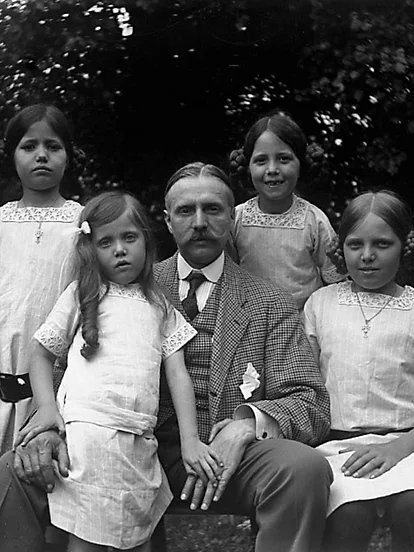
Emile Hermès

Émile Hermès with his four daughters

© Julie Hermès

1922

Émile Hermès

During the interwar period, lifestyles changed and the house broke new ground under the management of Émile Hermès, son of Charles-Émile. Hermès offered items that met society’s needs, from saddlery and harnesses to leather goods. Émile Hermès had been inspired by a very simple idea that decisively changed the course of the family business. During a trip to Canada, he was fascinated by the American “close-all” opening and closing system on the hood of a military car. In 1922, he obtained the exclusive rights to this system, known today as the zip or zipper; and it came to be used on many of the house’s bags.Throughout his life, Émile Hermès was an avid collector of works of art, books, objects and curiosities. The collection is constantly enriched by his successors and continues to be a source of inexhaustible inspiration for the house’s creations.

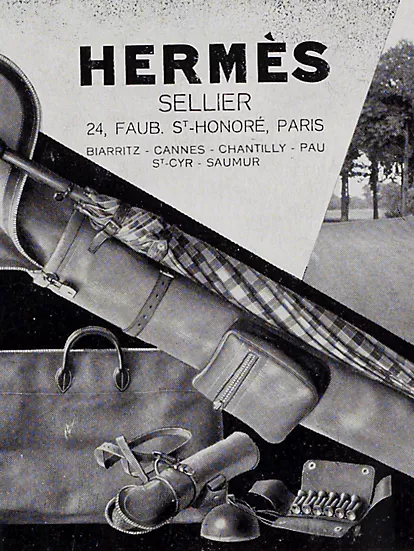
Première pièce de prêt-à-porter, le blouson de golf

Advertisement for golf equipment, 1929

© Draeger

1925

Creation of new métiers

Émile Hermès was not only attached to his roots, but passionate about his era. Under his leadership, the house opened up to new métiers. In 1925, the first men’s ready-to-wear garment, a golf jacket, was created. To complement their customers’ looks, Hermès quickly introduced jewellery in 1927, followed by watches and sandals in 1928.

Window display at Faubourg Saint-Honoré created by Leila Menchari, autumn 2011

© Guillaume de Laubier

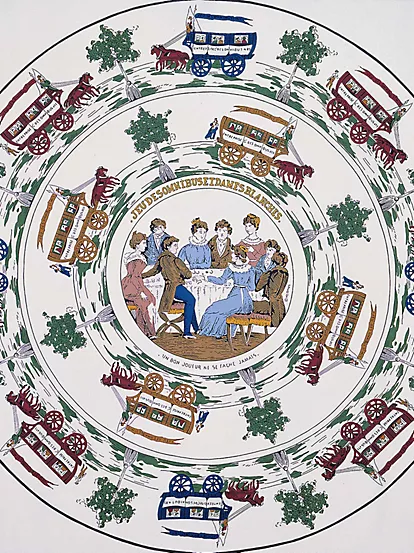
Bufanda 1937 First silk

Con Jeu des omnibus et dames blanches nació el famoso pañuelo de seda, el primero de una larga serie. 

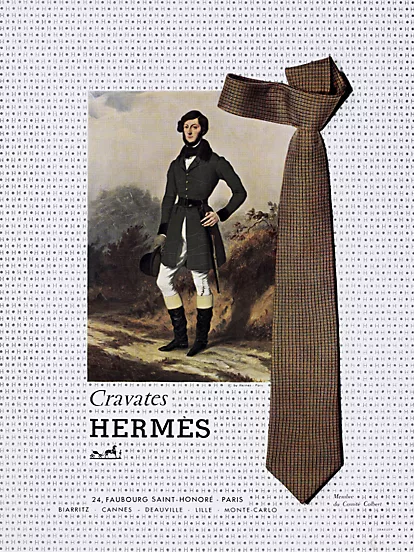
Publicité pour les cravates

Advertisement for ties, 1962

© Draeger

1949

Corbata The first
La creación de corbatas por parte de Hermès es una muestra del espíritu emprendedor de la casa. En Cannes, varios caballeros –a quienes se había denegado la entrada al casino– visitaron la tienda Hermès vecina en busca de la corbata requerida. Esta demanda llevó a la casa a empezar a producir este accesorio de seda, que se convirtió en un elemento esencial del vestuario masculino de Hermès.
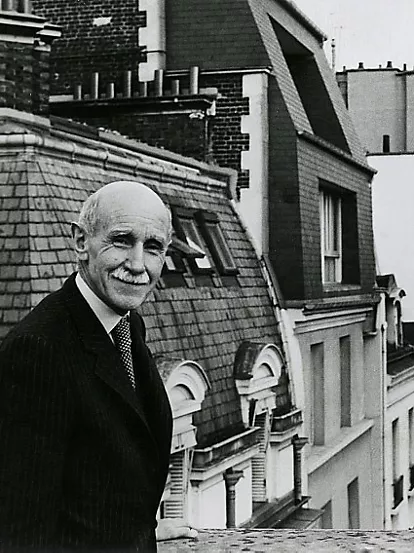
Robert Dumas on the roof terrace of 24 Faubourg Saint-Honoré, 1975

Window display at Faubourg Saint-Honoré created by Leila Menchari, autumn 2011

© Guillaume de Laubier

1951

 Robert Dumas

As the father of four daughters, Émile Hermès passed the torch to his sons-in-law. One of them, Robert Dumas, took over from his father-in-law as head of the business in 1951. He was responsible for many of the house’s major successes, including the first silk scarf, the Kelly bag and the Chaîne d’ancre bracelet, which he was inspired to create while observing boats moored in Normandy.

© Elisa Valenzuela

1956

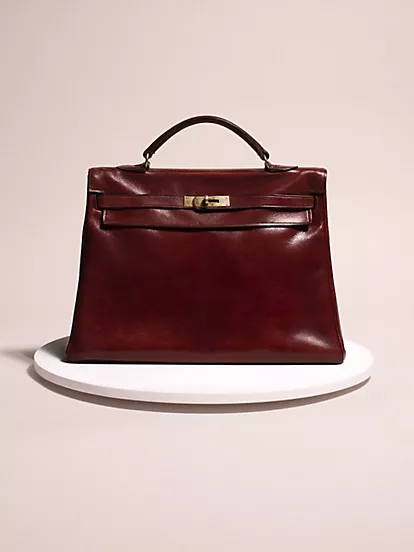
Kelly bolso, en homenaje a la princesa de Mónaco

Diseñado por Robert Dumas en la década de 1930, la historia de este bolso dio un giro inesperado en 1956, cuando se publicó en todo el mundo una fotografía de Grace Kelly llevándolo. Fue el inicio de una historia de éxito y la casa bautizó el bolso como Kelly en honor a la princesa.

Explore our bags collections


Window display at Faubourg Saint-Honoré created by Leila Menchari, autumn 2011

© Guillaume de Laubier

The 1960s

Window displays project the house’s imaginary world

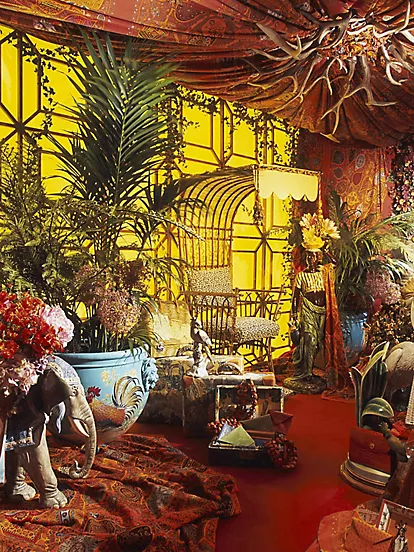
At the beginning of the 1960s, Leïla Menchari, a graduate of the Beaux-Arts of Tunis and Paris, joined Annie Beaumel in designing the window displays of the Faubourg Saint-Honoré store. From 1978 onwards, Leïla Menchari pursued this bold and flamboyant creative work on her own until 2013, when Antoine Platteau, set designer and scenographer for theatre and cinema, took over the transformation of these window displays into little theatres of elegance.

Première collection de prêt-à-porter Femme

© Jean-Louis Feith

1967

First women’s ready-to-wear collection

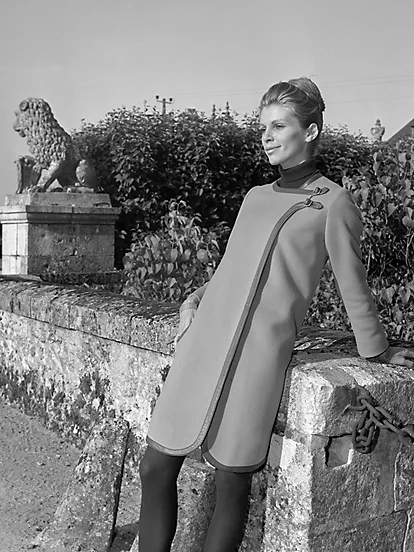
En 1967, la estilista francesa de origen húngaro Catherine Karolyi recibió el encargo del vestuario femenino. Hasta 1980, diseñó las colecciones de ropa y accesorios, incluida la famosa hebilla H.

1973

First issue of Le Monde d’Hermès 

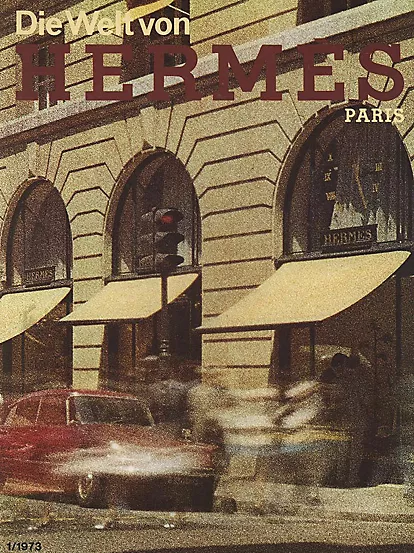
Más que una revista al uso, esta publicación nació en 1973 en Alemania con el nombre de Die Welt von Hermès, with Le Monde d’Hermès que surgió en Francia dos años más tarde. Hoy traducida a más de diez idiomas, Le Monde d’Hermès se distribuye por todo el mundo.

© Sacha van Dorssen

1978 

Jean-Louis Dumas

From 1978 onwards, Robert Dumas’ son, Jean-Louis, gradually revolutionised the house of Hermès. A visionary, curious about all things and all cultures, he diversified and projected the house onto the world map. Hermès embraced new métiers founded on unique know-how, such as watchmaking in 1978 – which operated under the name La Montre Hermès. In 1976, Hermès opened up to the art of shoe manufacturing with the bootmaker John Lobb; followed by the integration of Puiforcat silversmiths in 1993 and the Saint-Louis crystalworks in 1995.

Sac Birkin

© Elisa Valenzuela

1984

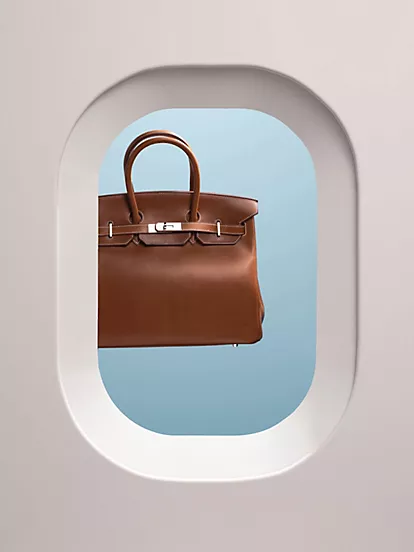
Creación del Birkin Bolsa

The Birkin bolso fue fruto de un encuentro fortuito entre Jean-Louis Dumas y la actriz y cantante Jane Birkin en un vuelo de París a Londres, que llevó a Jean-Louis Dumas a diseñar su bolso ideal. Elegante y voluminoso, para la noche o para el día – el Birkin Bolso was born.

150 ans d'hermès

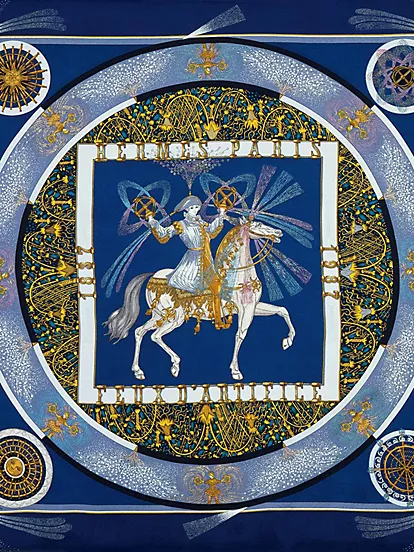
«Feux d'artifices», pañuelo en sarga de seda diseñado por Michel Duchêne para el 150.º aniversario de Hermès

1987

Hermès celebrates its 150th anniversary

Un memorable espectáculo de fuegos artificiales sobre el puente Pont-Neuf de París conmemoró el 150.º aniversario de Hermès. Esta celebración inauguró el primer tema anual de una tradición que se ha perpetuado desde entonces para nutrir todas las formas de creatividad con una fuente de inspiración compartida.

Les Ateliers d'Hermès à Pantin

© Alfredo Piola

1992

Inauguración del emplazamiento de Pantin

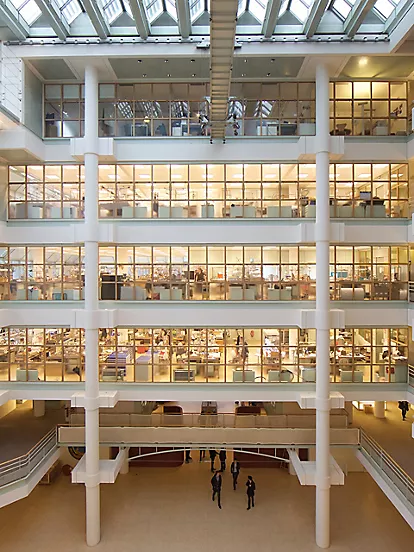
The leather workshops moved from the first floor of 24 rue Faubourg Saint-Honoré to Pantin, just outside Paris. The architecture of the new site offered a bright and spacious workspace for the artisans. The site was extended in 2013 with the Cité des métiers, a major project encompassing several buildings linked by five themed gardens. Led by the architects RDAI, the operation received the Prix de l’Équerre silver award in 2014.

Hermès Madison

©Dolorès Marat

2000

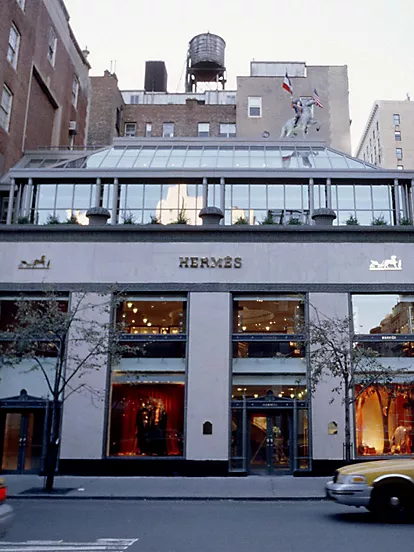
Inauguración de una Maison Hermès en Nueva York

Con Jean-Louis Dumas todavía al frente, Hermès se desarrolló por todo el mundo con la apertura de numerosas tiendas, cada una de las cuales combinaba ingeniosamente la identidad del talabartero con la cultura local. Entre estas tiendas internacionales se inauguraron varias Maisons Hermès: en Madison Avenue, en Nueva York (EE. UU.), en 2000; en un edificio de ladrillos de cristal diseñado por Renzo Piano en Ginza, Tokio (Japón), en 2001; y en Dosan Park, Seúl (Corea), en 2006. Hermès también lanzó un sitio web de comercio electrónico en Estados Unidos en 2002 y otro en Francia tres años más tarde.

© Marianne Rosenstiehl

2005 

Pierre-Alexis Dumas

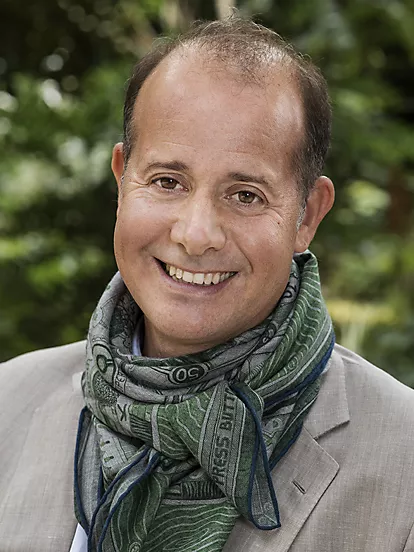
Sixth generation family member, Pierre-Alexis Dumas, son of Jean-Louis, was appointed artistic director of Hermès. Creativity became ever more abundant within the different métiers, bringing innovation and imagination together. The house expanded its range of know-how, complementing its jewellery product offer with a first Haute Bijouterie collection in 2010. The following year, the home universe launched home furnishing fabrics and wallpapers for the first time. Hermès Horizons designed unique and bespoke objects, while the Apple Watch Hermès bore witness to a bold and innovative partnership with Apple, initiated in 2015.


Patrick Thomas

© Studio des fleurs

2006

Transition with Patrick Thomas

At the request of Jean-Louis Dumas, the continued development of the business was undertaken by Patrick Thomas, his former right-hand man and Managing Director of the group from 2003 to 2006. He decentralised the strategic organisation of the métiers and reorganised Hermès’ presence across the world into geographical regions. Patrick Thomas also ensured the transition between the two generations, until the appointment of Axel Dumas, nephew of Jean-Louis Dumas, as Executive Chairman in 2013.

Silenciarreproducir vídeopausar vídeo

2008

Creación de la Fondation d’entreprise Hermès

Por iniciativa de Pierre-Alexis Dumas, la casa añadió una nueva dimensión a su política de mecenazgo y a su compromiso filantrópico con el lanzamiento de la Fondation d’entreprise Hermès. Fiel a los valores artesanales y humanistas de la empresa familiar, la fundación trabaja principalmente en los ámbitos de la creación, la transmisión del saber hacer, la preservación del planeta y la solidaridad, a través de sus propios programas de apoyo, tanto en Francia como en el extranjero. Aunque diversa, la actividad de la Fundación está motivada por una única convicción: what we do creates who we are.

Visit Fondation's website

Silenciarreproducir vídeopausar vídeo

2010

petit h, creation in reverse

El taller petit h se creó bajo el liderazgo de Pascale Mussard, sobrina de Jean-Louis Dumas, y adopta un enfoque único dentro de la casa: el de la creación inversa. Partiendo de materiales no utilizados de las manufacturas Hermès, artesanos y diseñadores dan rienda suelta a su inventiva para crear objetos únicos e inesperados, apoyándose en el excepcional saber hacer de la casa.

© Agence World Red Eye Photography

2013 

Axel Dumas

Nombrado presidente ejecutivo en 2013, Axel Dumas, sobrino de Jean-Louis Dumas, ha reforzado el crecimiento dinámico del grupo con la inauguración de la quinta Maison Hermès en Shanghái en 2014 y la apertura de numerosas tiendas en todo el mundo. En 2019, Hermès llegó a Polonia con la apertura de su primera tienda en Varsovia. Axel Dumas también ha impulsado la implantación de la estrategia digital del grupo, que culminó en 2017 con el rediseño del sitio web hermes.com. Ha llevado a Hermès a la nueva era tecnológica, en sintonía con las expectativas de unos clientes cada vez más conectados. Bajo su dirección, el grupo intensifica la dinámica omnicanal dentro de la organización.

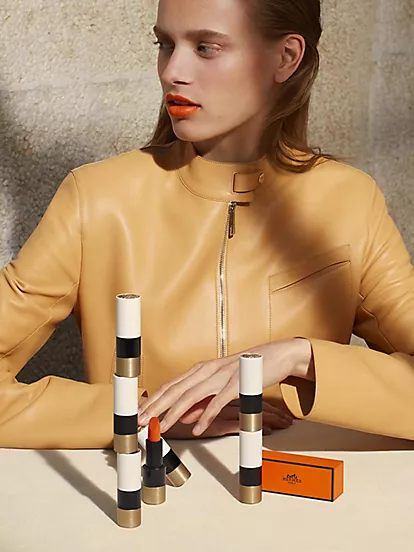
Rouge Hermès, la beauté est un geste

© Jack Davison

2020

Creation of a new métier, Beauty

Hermès presented its sixteenth métier, Beauty, with the first collection, Rouge Hermès, dedicated to the beauty of the lips. The result of five years of design, research and development, in the spirit of excellence and integrating the know-how that characterises the house, Hermès Beauty combines high standards, durability and aesthetics.

Explore make-up collections

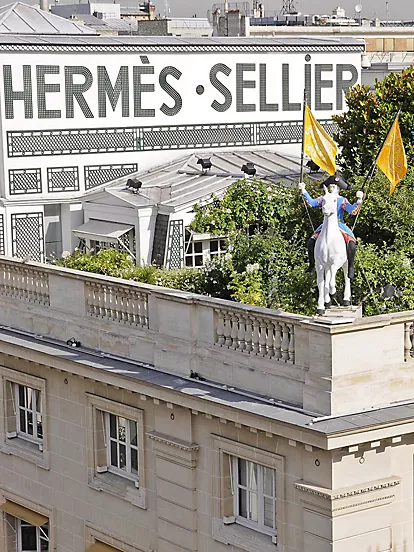
Hermès 24 Faubourg Saint-Honoré

The artilleryman on the roof terrace of 24 Faubourg Saint-Honoré

© Quentin Bertoux

2018

Hermès international entered the CAC 40

Esta decisión, adoptada por el Conseil Scientifique des Indices (Consejo Científico de Índices) y anunciada por Euronext, refrenda los logros industriales y bursátiles de la empresa y certifica la solidez del espíritu emprendedor que se ha convertido en su modelo de crecimiento artesanal. Hermès sigue afirmando su independencia gracias a una estructura accionarial de base familiar comprometida con mantener la mayor parte de su producción en Francia y perpetuar su saber hacer al servicio de la creación.

© J. Leon

2021

The Ecole Hermès des Savoir-Faire

 2021, Hermès opened its 19th leather goods workshop, located in Guyenne (Gironde), and created the École Hermès des Savoir-Faire apprenticeship training school (CFA). The school provides vocational training culminating in a national diploma in leatherwork (CAP Maroquinerie).


© Lina Ghotmeh

2025

Inauguración del 24.º taller de marroquinería en Francia

El vigésimo cuarto centro de marroquinería de Hermès en Francia, la manufactura de L’Isle-d’Espagnac, acogerá finalmente a 260 artesanos formados en el excepcional saber hacer de la casa. Esta nueva manufactura refleja el éxito de las creaciones de marroquinería y talabartería de Hermès, producidas exclusivamente en Francia.